General / Restorative Dentistry
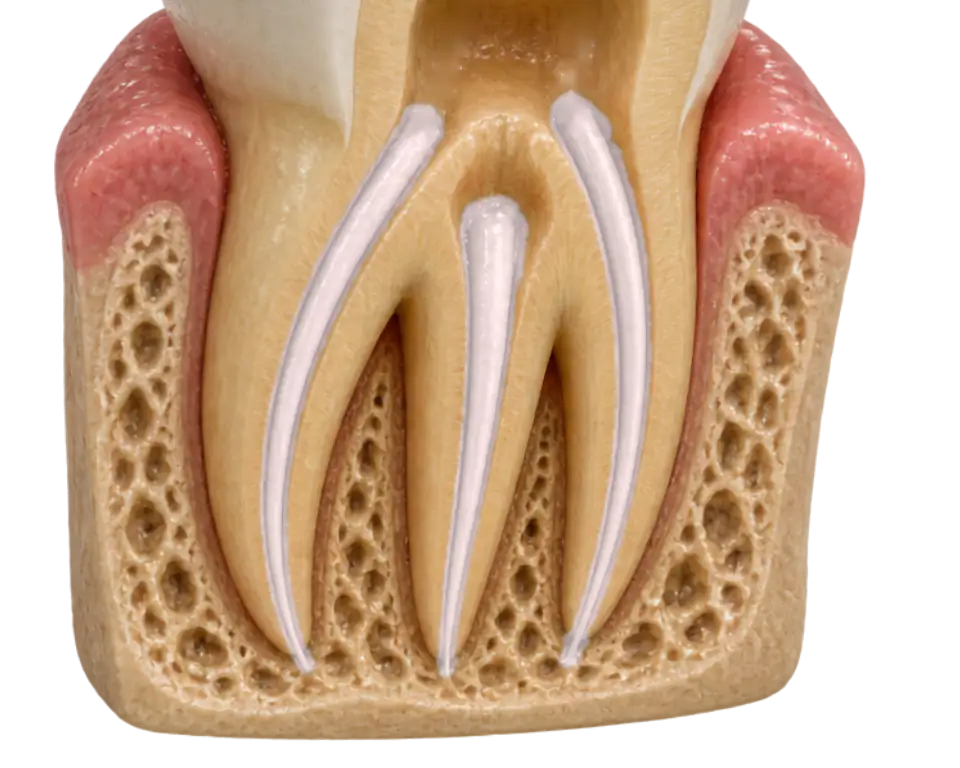
Root Canal Treatment
Root canal treatment may be recommended when the soft tissue inside a tooth is inflamed or infected.
The aim is to treat the root canal system and retain a tooth that can be restored, so preserving a tooth where possible.
01 · Cross-section
Root Canal Treatment
02 · Filling
Decay is removed, the tooth is filled in its own shade.
For small and medium areas of decay, the affected tissue is removed and the cavity is closed in layers with tooth-coloured composite.
- Tooth-coloured filling
- Inlay / onlay
03 · Root canal
Root canals are cleaned and filled.
When infection reaches the nerve, the canals are cleaned, shaped and sealed. The aim is to keep the tooth in your mouth.
04 · Crown
A crown completes the tooth.
If a lot of tooth structure has been lost, the tooth is protected with a custom-made crown. A bridge may be planned where teeth are missing. Which option suits you is decided at your examination.
- Zirconia crown
- All-ceramic crown
- Bridge
Planned around your needs
Your dentist examines the tooth and considers whether it is restorable. Symptoms alone cannot establish the diagnosis, and extraction may be discussed where retention is not appropriate.
What treatment may involve
Treatment involves cleaning and filling the canals, followed by a suitable restoration. Local anaesthetic is usually used. Some cases require more than one appointment.
What to understand before deciding
Treatment can fail or infection can return. A tooth may need retreatment, a crown or extraction later. Soreness can occur after treatment and should be discussed if persistent or worsening.
Will the tooth need a crown afterwards?
Sometimes. The decision depends on the tooth, the remaining structure and the forces on it. Your dentist will explain the restoration recommended.
Before / After
Before and after, side by side.
- Root Canal TreatmentBeforeAfter
Yer tutucu: bu tedavinin vaka görseli eklenecek
Root Canal Treatment
Illustrative example
- Treatment date
- 10 February 2026
- Before photo taken
- 3 February 2026
- After photo taken
- 17 February 2026
Patient treated at our clinic. Both photos were taken under identical lighting and shooting conditions, unretouched. Medically indicated treatment.
How is my treatment planned?
Planning starts with an examination and the imaging your case needs, including 3D imaging (DVT) where it helps. Afterwards your dentist goes through the options with you and gives you the plan in writing. Whether a treatment is suitable can only be judged after the examination, so every plan is made individually for you.
How often should I have a check-up?
Unless advised otherwise, we recommend a routine check-up and professional cleaning every six months. Regular visits help to spot problems early. If you have implants or crowns, regular check-ups are also part of looking after them, and your dentist will tell you how often you should come.
What are my options for missing teeth?
Depending on your needs and wishes, we offer implants, bridges and dentures. Which one fits you depends on the number and position of the missing teeth, the condition of the bone and your own preferences. Your dentist explains the options after the examination, and a 3D image shows how much bone is available.
Do you treat children?
Yes. Children's dentistry at Apollon covers check-ups and preventive treatments such as fluoride and fissure sealants, in a calm setting. We explain each step in a way a child can follow. If you are unsure what your child needs, write to us or call, and we will suggest a sensible first step.
What should I do in a dental emergency?
Call us straight away or write to us on WhatsApp. Describe severe pain, a broken tooth or swelling, and our team will tell you what to do until you can reach the clinic. The clinic is open Monday to Saturday, from 09:00 to 18:00, and you can find all contact details on our contact page.
Treatment plan
Start with your own assessment
Tell us about your concerns and expectations. Your consultation is the place to compare suitable options, understand the estimated costs and decide whether to proceed.
Get Your Plan- Your details.
- What would you like to improve?
- Dental condition.
- Upload Photos / X-rays.
- Preferred contact method.