General / Restorative Dentistry
Gum Treatment
Explore gum treatment at Apollon Clinic. Understand individual planning, treatment stages, suitability and the questions to discuss with your dentist.
Healthy gums are part of a healthy smile. Bleeding, swelling, persistent bad breath or changes in the gums deserve assessment. Gum treatment is planned according to whether inflammation is limited to the gums or involves deeper supporting tissues.
01 · Surface
Gum Treatment
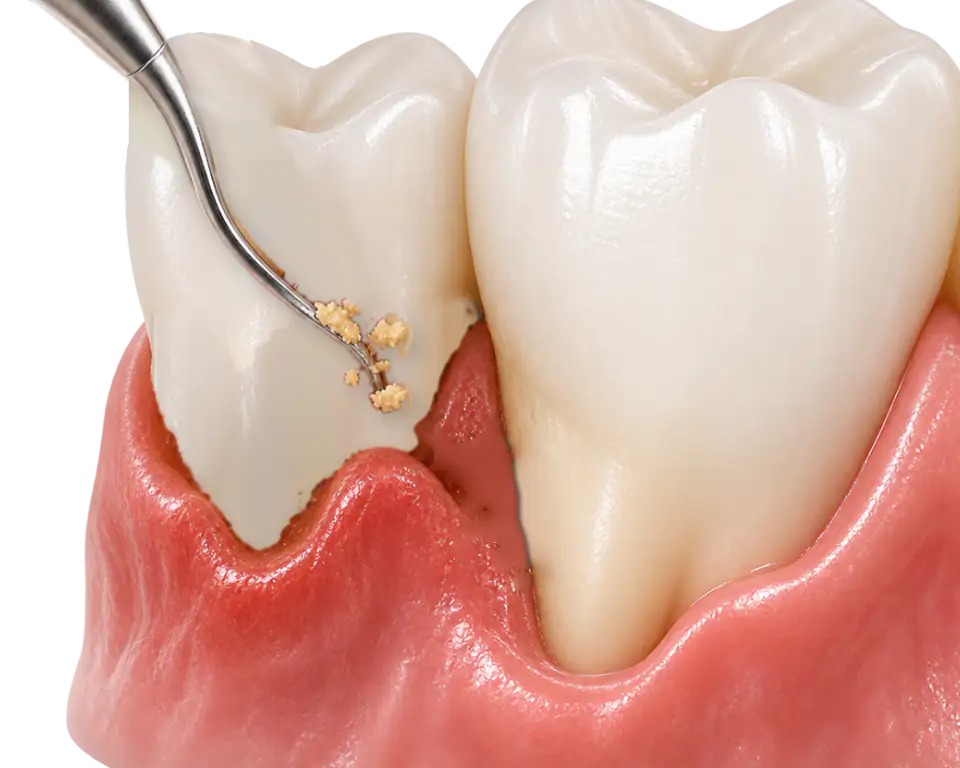
02 · Cleaning
Plaque and tartar are professionally removed.
Plaque and tartar are cleaned from surfaces the toothbrush cannot reach, and the surface is polished.
03 · Fluoride
Fluoride supports the enamel.
Fluoride applied to the cleaned surface helps support the enamel against acid attacks.
04 · Sealant
Deep grooves are covered with a thin seal.
Deep fissures on the chewing surfaces of molars can be covered with a thin, clear sealant.
05 · Gums
The gums are part of the care, too.
The gum margin is checked, and brushing and cleaning between the teeth at home are planned together. Your check-up interval is set to suit you.
- Check-up
- Professional cleaning
- Oral hygiene instruction
Planned around your needs
Your dentist assesses gum condition, plaque, pocket depths and other relevant factors. Home cleaning, smoking and some health conditions may influence the plan.
What treatment may involve
Care may include oral hygiene guidance and professional cleaning above or below the gum line. More advanced disease may require additional treatment or referral.
What to understand before deciding
Established loss of support may not be reversible. Treatment aims to control disease and preserve stability; ongoing reviews and home care are important. Temporary sensitivity or gum recession may become noticeable after treatment.
Should gum concerns be treated before cosmetic dentistry?
Usually, active gum disease needs attention before elective restorative or aesthetic treatment. Your dentist will explain the sequence appropriate to you.
Before / After
Before and after, side by side.
- Gum TreatmentBeforeAfter
Gum Treatment
Illustrative example
- Treatment date
- 4 November 2025
- Before photo taken
- 28 October 2025
- After photo taken
- 12 January 2026
Patient treated at our clinic. Both photos were taken under identical lighting and shooting conditions, unretouched. Medically indicated treatment.
- Gum TreatmentBeforeAfter
Yer tutucu: bu tedavinin vaka görseli eklenecek
Gum Treatment
Illustrative example
- Treatment date
- 10 February 2026
- Before photo taken
- 3 February 2026
- After photo taken
- 17 February 2026
Patient treated at our clinic. Both photos were taken under identical lighting and shooting conditions, unretouched. Medically indicated treatment.
How is my treatment planned?
Planning starts with an examination and the imaging your case needs, including 3D imaging (DVT) where it helps. Afterwards your dentist goes through the options with you and gives you the plan in writing. Whether a treatment is suitable can only be judged after the examination, so every plan is made individually for you.
How often should I have a check-up?
Unless advised otherwise, we recommend a routine check-up and professional cleaning every six months. Regular visits help to spot problems early. If you have implants or crowns, regular check-ups are also part of looking after them, and your dentist will tell you how often you should come.
What are my options for missing teeth?
Depending on your needs and wishes, we offer implants, bridges and dentures. Which one fits you depends on the number and position of the missing teeth, the condition of the bone and your own preferences. Your dentist explains the options after the examination, and a 3D image shows how much bone is available.
Do you treat children?
Yes. Children's dentistry at Apollon covers check-ups and preventive treatments such as fluoride and fissure sealants, in a calm setting. We explain each step in a way a child can follow. If you are unsure what your child needs, write to us or call, and we will suggest a sensible first step.
What should I do in a dental emergency?
Call us straight away or write to us on WhatsApp. Describe severe pain, a broken tooth or swelling, and our team will tell you what to do until you can reach the clinic. The clinic is open Monday to Saturday, from 09:00 to 18:00, and you can find all contact details on our contact page.
Treatment plan
Start with your own assessment
Tell us about your concerns and expectations. Your consultation is the place to compare suitable options, understand the estimated costs and decide whether to proceed.
Get Your Plan- Your details.
- What would you like to improve?
- Dental condition.
- Upload Photos / X-rays.
- Preferred contact method.